


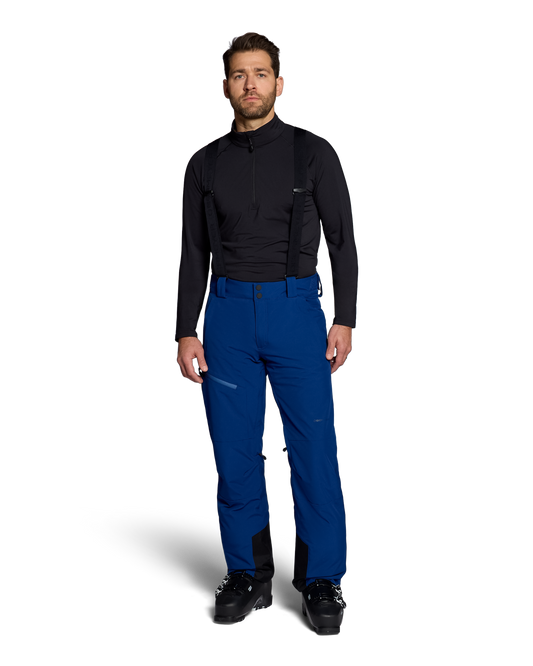

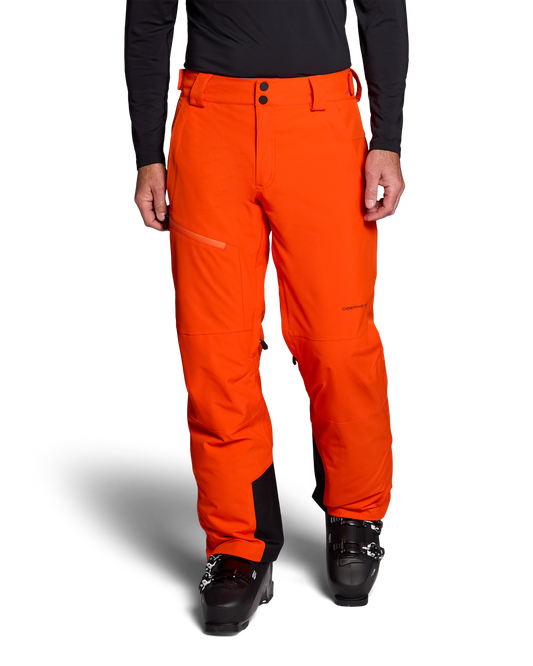

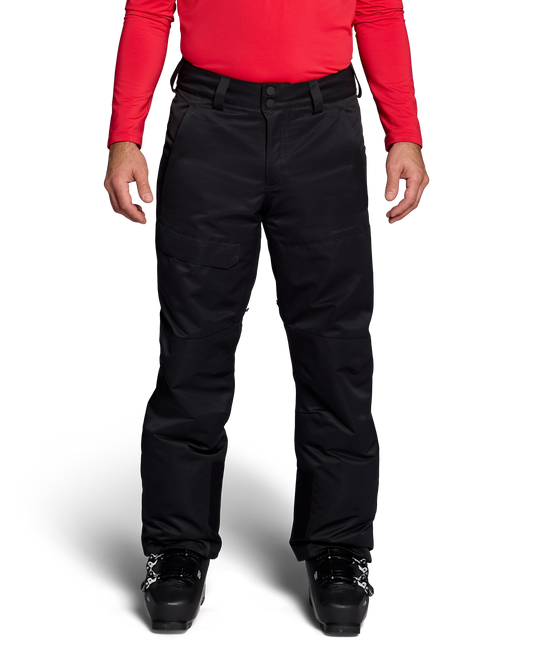


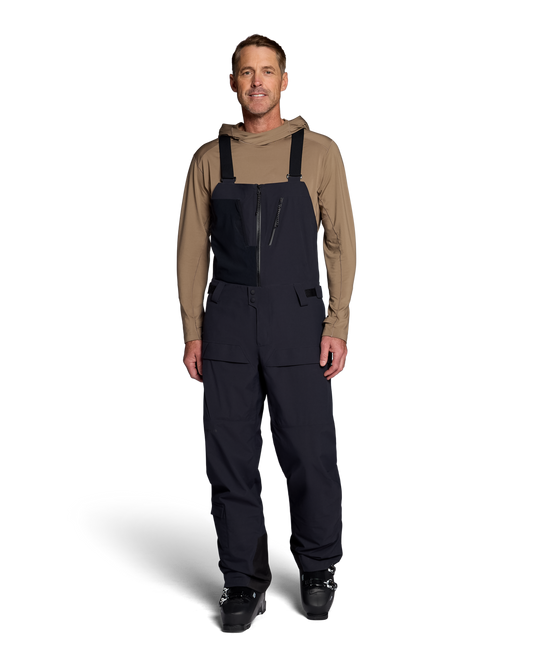







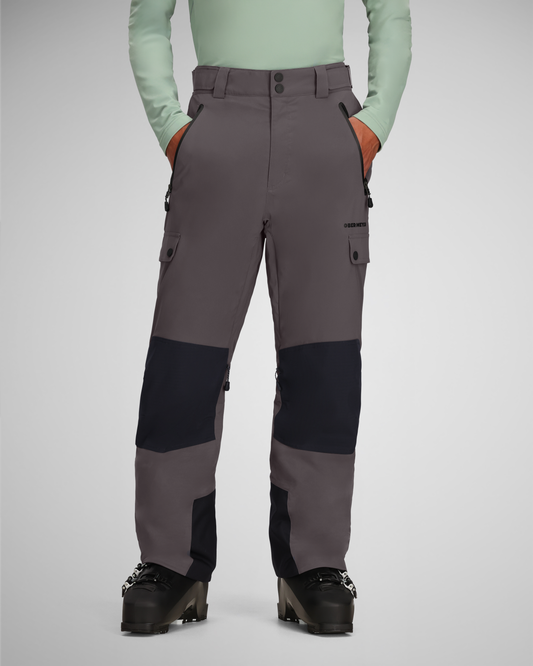

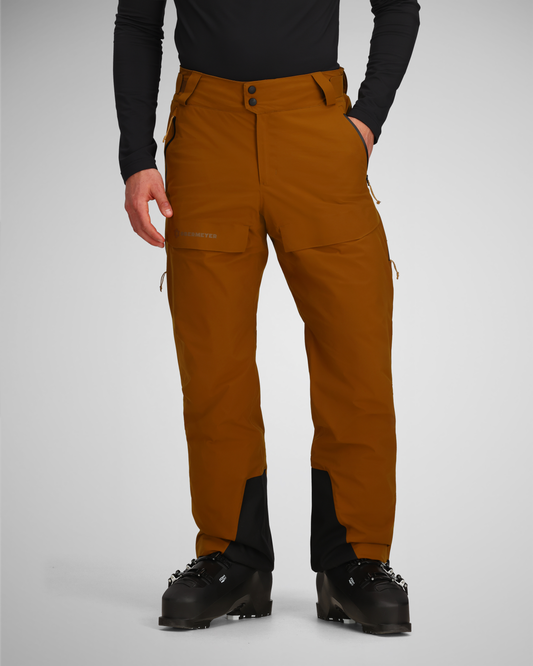


Men's Ski Pants and Snow Bibs
Wet legs end ski days fast. Ski pants and bibs keep snow out and let sweat escape, so you stay dry from first chair to last lap.
Why Good Snow Pants Matter
Snow pants block wind, repel water, and breathe. Regular pants don’t. One fall, one wet chairlift, and jeans are done. Ski-specific fabrics and articulated cuts are built for long days, changing weather, and unrestricted movement.
Snow Pants or Bibs
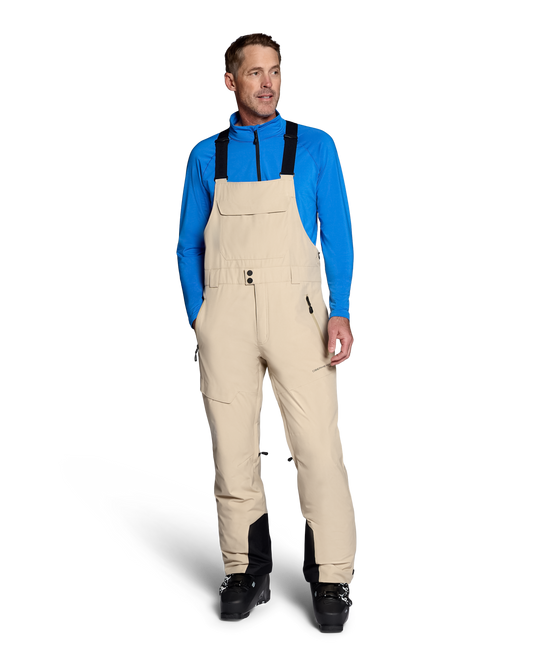
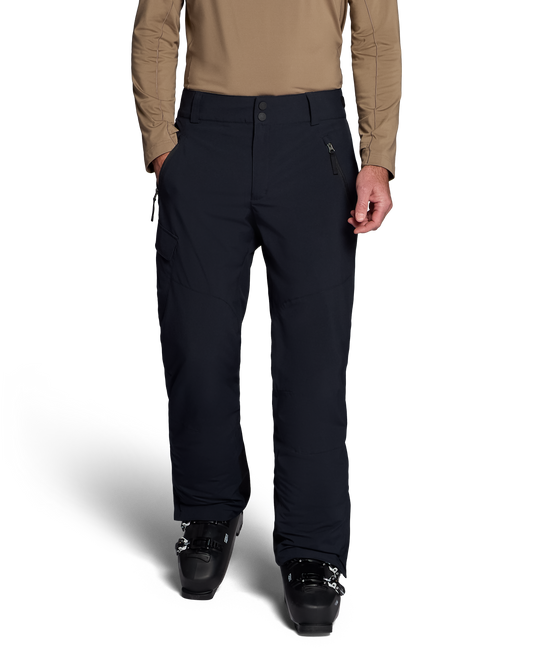
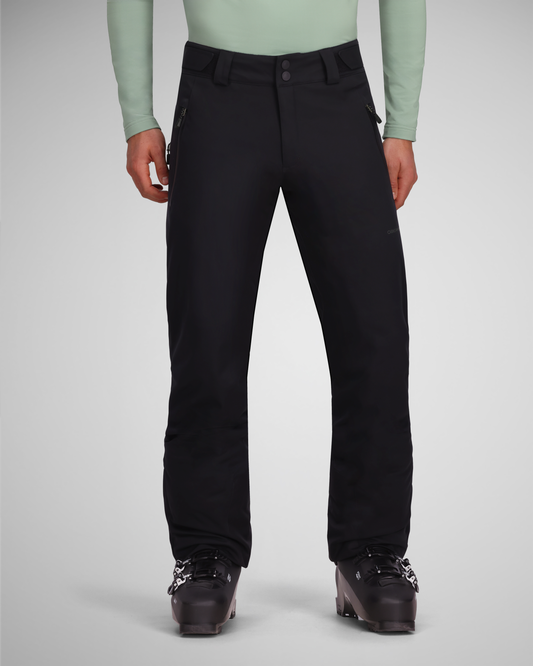
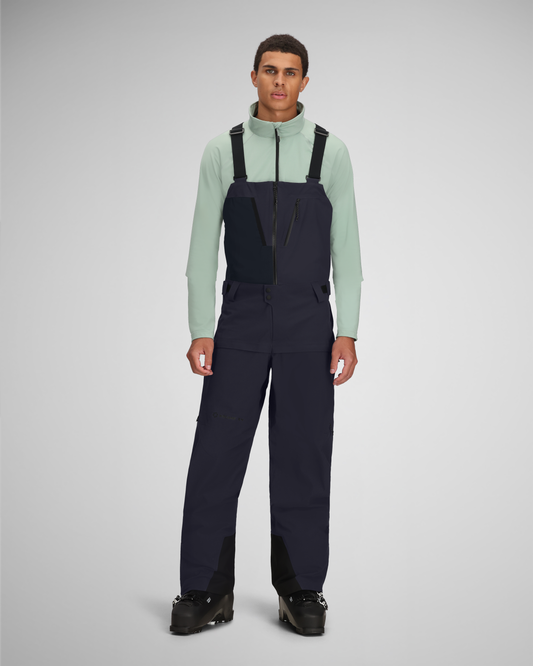
Snow pants stop at the waist. Bibs extend to the chest with suspenders for more coverage.
| Feature | Snow Pants | Bibs |
| Coverage | Waist down | Chest to ankle |
| Snow protection | Standard waistband | Full upper-body seal |
| Ease of use | Quick on/off | Takes more time |
| Layering | Pairs with any jacket | Fewer layers needed |
Coverage and Warmth
Bibs shine in deep snow and frequent falls. They keep snow out when your jacket rides up and add a little core warmth. Pants are simpler, faster, and easier when you’re in and out of the lodge.
Mobility and Layering
Bibs remove the jacket-to-pants gap, but they’re less convenient for breaks and can feel bulkier at first. Pants are easier to vent and layer, especially on warmer spring days.
Picking the Right Style for Your Riding
- Deep powder and park laps: Bibs like the A.M.F. Bib Pant
- Resort cruising and spring skiing: Pants
- Backcountry touring: Either works, though pants usually vent heat more easily
Waterproof Ski Pants That Actually Keep You Dry
Waterproof-breathable membranes block outside moisture while letting sweat vapor escape. That matters most in wet storms, slush, and soggy chairlift seats.
What Waterproof Ratings Mean
Higher ratings handle more sustained moisture.
- Entry-level: Occasional resort days in dry snow
- Mid-range: Wet seats, sitting in snow, moderate storms
- High-performance: Heavy precip and all-day exposure
Breathability for Touring and High-Output Days
If you run hot, tour, or hike bootpacks, breathability matters as much as waterproofingIf you run hot, tour, or hike bootpacks, breathability matters as much as waterproofing. Otherwise moisture gets trapped, and you’ll feel cold the second you stop.
Seam Sealing and DWR Treatments
- Seam sealing: Tape over stitched seams to stop leaks
- DWR: A coating that helps water bead and roll off
DWR wears down over time but can be refreshed.
Insulated Ski Pants for Cold Days and Storm Laps
Insulation should match your temps and activity level.
Shell Pants for Spring and Backcountry
No insulation, just weather protection. Best for warm days, touring, and precise layering.
Lightly Insulated Pants for All-Mountain
A versatile middle ground: enough warmth for lifts, enough breathability for active skiing.
Fully Insulated Pants for Frigid Resort Days
Best for very cold weather, long chairlift rides, and skiers who run cold.
How to Find Your Fit
A good fit should move with you without extra fabric dragging at the hem.
Regular, Relaxed, and Active Fit Profiles
- Regular: Works for most skiers
- Relaxed: More room for layering and freestyle movement
- Active: More athletic, mobility-focused cut
Lengths for Tall and Short Builds
Short, regular, and tall inseams help prevent bunching, dragging, or exposed ankles.
Sizing Tips When Layering Underneath
Try pants on with base layers. Sit, bend your knees, and make sure nothing digs or pulls.
Features Worth Looking For
Thigh Vents and Airflow
Vents dump heat fast without stripping layers.
Reinforced Cuffs and Boot Gaiters
Reinforced cuffs resist edge cuts. Boot gaiters keep powder out.
Pockets and Suspender Systems
Zippered pockets secure essentials. Some pants add emovable suspenders if you want extra hold without a bib.
Ski Pants That Work for Snowboarding Too
Good ski pants and bibs work for both. Snowboarders often like a looser fit, but waterproofing, insulation, and features matter the same either way.
Built for 106 Winters and Counting
Our men’s snow pants and bibs range from shells to fully insulated styles, with multiple fits and lengths for different riders and conditions.