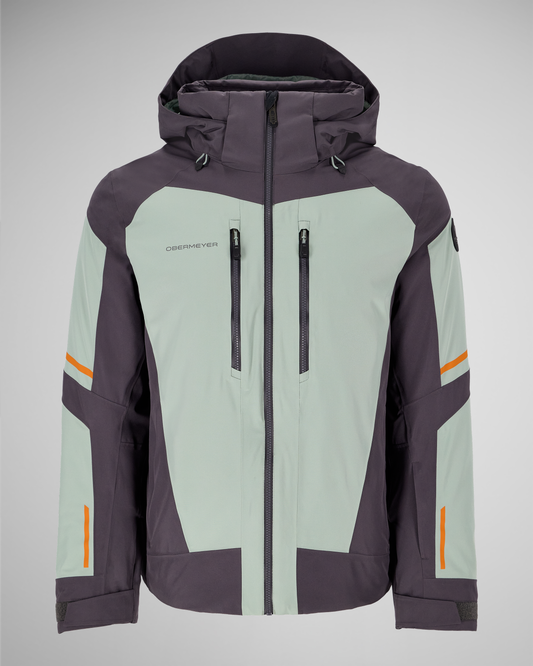
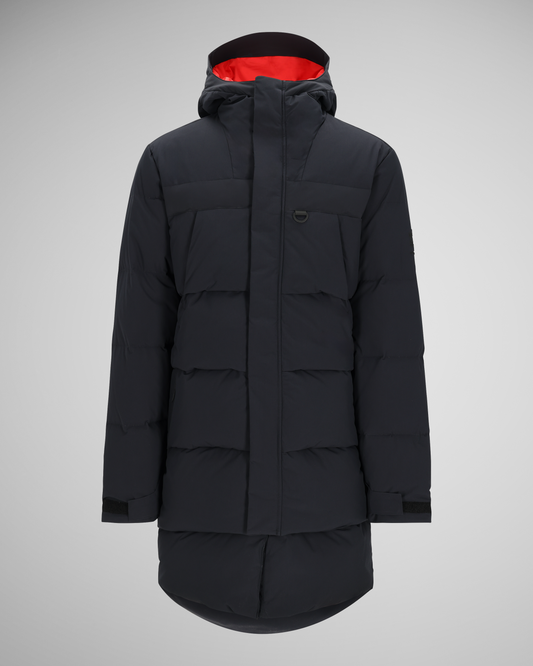
There's regular cold, and then there's Jackson Hole in January, Whistler in a whiteout, or an Alta morning when the chairlift feels like a wind tunnel aimed straight at your face. That's the cold this guide is built for. It's also where a men's ski coat stops being a nice-to-have and starts being the reason your day on the mountain goes well instead of miserably.
The best men's ski coats for cold weather combine a waterproof rating of at least 15k, insulation matched to how hard you ski, and ski-specific features like helmet-compatible hoods and powder skirts. Below, we break down what to look for and share 10 Obermeyer jackets built for serious cold, from insulated resort coats to technical backcountry shells.
Table of Contents
- What Makes The Best Men's Ski Coats For Extreme Cold?
- Which Technical Features Matter Most In Cold Weather Destinations?
- Resort Skiing vs Backcountry Touring: What to Prioritize
- Obermeyer's Approach to Cold Weather Craftsmanship
- What Are The Top 10 Men's Ski Coats For Cold Weather Destinations?
- How to Choose the Right Coat for Your Terrain
- Caring for Your Men's Ski Coat
What Makes The Best Men's Ski Coats For Extreme Cold?
A regular winter jacket has no business on a chairlift at minus twenty. Ski coats are engineered for insulation, weather resistance, and breathability in ways everyday outerwear cannot match.
Down insulation offers the best warmth-to-weight ratio in dry cold. Synthetic fill keeps insulating even when it gets wet, which matters in variable spring conditions. Blended fills split the difference between the two. A waterproof breathable membrane, typically rated between 15k and 30k, keeps snow and moisture out while still venting heat when you're working hard on a run. Obermeyer builds many styles with recycled fill and responsibly sourced materials, so performance does not come at the expense of the planet.
Ski-specific details separate a true ski coat from anything else in the closet. Helmet-compatible hoods, adjustable cuffs, and integrated powder skirts keep snow exactly where it belongs, which is outside. Pit zips and venting panels manage heat on high-output days, and Recco reflectors are quietly built in for backcountry safety.
Which Technical Features Matter Most in Cold Weather Destinations?
When you're dropping into a groomer at Jackson or skinning above treeline in the Wasatch, jacket specs are not marketing copy. They are the difference between a great day and a rough one.
- Waterproofing ratings between 10k and 30k tell you how much pressure a fabric can withstand before it leaks. Higher ratings hold up better in heavy snow or wet spring conditions.
- Fully taped seams and a DWR finish stop moisture from creeping in through the stitching or wicking through the face fabric.
- Insulation distribution matters more than total fill weight. Strategic baffling, with heavier insulation across the core and lighter coverage through the arms, keeps you warm without restricting your pole plant.
- Pit zips, chest pockets positioned above a harness, and glove-friendly zipper pulls are functional requirements for anyone actually skiing hard, not just nice extras.
- Ski jackets are built for on-hill movement, with articulated patterning, helmet-compatible hoods, and lift pass pockets. Snow jackets are more lifestyle-oriented and fine for a casual resort day, but not optimized for technical terrain.
Resort Skiing vs Backcountry Touring: What to Prioritize
The right coat depends entirely on where you spend your days, since resort skiing and backcountry touring ask very different things of a jacket.
A heavily insulated jacket earns its place on groomers, in lift lines, and anywhere standing around is part of the day. But that same warmth becomes a liability the moment you start skinning uphill. For touring, a shell paired with a packable midlayer lets you regulate temperature as your output changes: dump heat on the climb, add insulation at the top.
- Resort skiing rewards warmth, durability, and convenience features like lift pass pockets and helmet-compatible hoods.
- Backcountry touring demands lighter weight, serious breathability, and a jacket you can pack down mid-tour.
- Both environments benefit from high waterproof ratings and avalanche-compatible features, since weather does not care which side of the resort boundary you're on.
Obermeyer's Approach to Cold Weather Craftsmanship
Obermeyer has been building mountain-ready outerwear since 1947, and that history shows up in the construction, not just the marketing. Waterproof ratings run as high as 30k, with breathability specs built to hold up across a full ski day. Many styles use recycled and responsibly sourced fabrics, so the coat performs without cutting corners on materials. Taped seams, reinforced stress points, and articulated patterning let these jackets move with you on steep terrain, whether you're wearing a relaxed powder coat or an active fit shell.

What Are the Top 10 Men's Ski Coats for Cold Weather Destinations?
Not every ski coat is built for the same mountain. If you're headed somewhere genuinely cold, whether that's Jackson Hole in January, Whistler in a polar snap, or anywhere in the Alps above 2,000 meters, these 10 Obermeyer jackets are worth pulling off the rack.
- Charger Jacket: Insulated with a 30k waterproof rating and an active fit, built for extreme cold and all-day resort skiing when you want warmth without extra bulk.
- M Klausy Down Parka: A down-insulated parka with a 30k waterproof rating and relaxed fit, ideal for standing around in lift lines or spectating on the coldest days of the season.
- M Oberreute Jacket: Lightly insulated with a 30k waterproof rating and relaxed fit, a versatile pick for skiers who move between resort laps and colder backcountry mornings.
- M Steibis Jacket: A technical shell with a 30k waterproof rating and relaxed fit, well suited to backcountry days that demand serious weather protection without added insulation weight.
- Foraker Shell Jacket: A breathable shell with a 20k waterproof rating and relaxed fit, built for touring days where venting and packability matter more than warmth.
- Fall Line Jacket: Insulated with a 15k waterproof rating and regular fit, a dependable everyday resort coat for consistent cold weather warmth.
- Cirque Jacket: Lightly insulated with a 15k waterproof rating and relaxed fit, a freeride-friendly style that layers easily for variable conditions.
- Foundation Jacket: Insulated with a 15k waterproof rating and regular fit, a reliable option for skiers who want solid warmth without a premium price tag.
- A.M.F. Jacket: Lightly insulated with a 20k waterproof rating and relaxed fit, a strong middle ground for skiers who want warmth and breathability in one coat.
- Raze Jacket: Lightly insulated with a 15k waterproof rating and regular fit, an everyday jacket built for layering across a range of cold weather days.
Each jacket delivers a different balance of warmth, waterproofing, and fit, so match the coat to your typical terrain and temperature range before you buy.
How to Choose the Right Coat for Your Terrain
Destination matters more than most skiers admit. The Rockies bring dry cold and light powder, so breathability should rank high on your list. The Alps throw wet snow and high wind, which calls for serious waterproofing in the 20k range and up. Northern regions like Utah's backcountry or Canadian resorts call for maximum insulation with no compromises.
Ski your style honestly. Aggressive, high-output skiers run hot and need a breathable shell, while casual resort skiers benefit more from insulated warmth. Match insulation weight to your activity level: the more you move, the less fill you actually need.
Caring for Your Men's Ski Coat
A technical ski coat is an investment, and keeping it performing well takes about thirty minutes a season.
- Wash insulated jackets in cold water on a gentle cycle with a technical cleaner like Nikwax Tech Wash. Regular detergent strips DWR and clogs down clusters, so skip it. Tumble dry on low with a few tennis balls to help the fill re-loft.
- Restore DWR by running a warm dryer cycle after washing, or apply a spray-on treatment like Nikwax TX. Direct. If water soaks in instead of beading off, that's your sign the membrane needs attention.
- Store down jackets loosely hung or laid flat. Long-term compression kills loft permanently. Synthetic fills are more forgiving but still prefer a cool, dry space over a stuff sack during the off-season.
Take care of the coat, and it shows up ready every November, no excuses.

Final Word
The right coat doesn't complicate your day; it disappears into it. Whether you're lapping groomers at the resort, skinning into the backcountry, or packing for a destination that takes cold weather seriously, the best men's ski coat matches how you actually ski: the right warmth, the right waterproofing, and a fit that moves with you. Get those three things right, and everything else follows.
Explore the full Men's Jackets collection and find the coat built for the mountain days worth showing up for.
FAQs
Do men’s ski coats need to be waterproof?
Yes, waterproof or highly water-resistant fabrics help maintain warmth and comfort.
Can I wear a ski coat as an everyday winter jacket?
Yes, many ski coats double as everyday snow jackets with excellent insulation.
Is down or synthetic insulation better for skiing?
Yes, both work well, but synthetic excels in wet conditions while down offers superior warmth-to-weight.
Should ski coats fit loosely?
No, ski coats should allow movement without excess bulk.
Do I need a helmet-compatible hood?
Yes, especially for resort or backcountry skiing.